
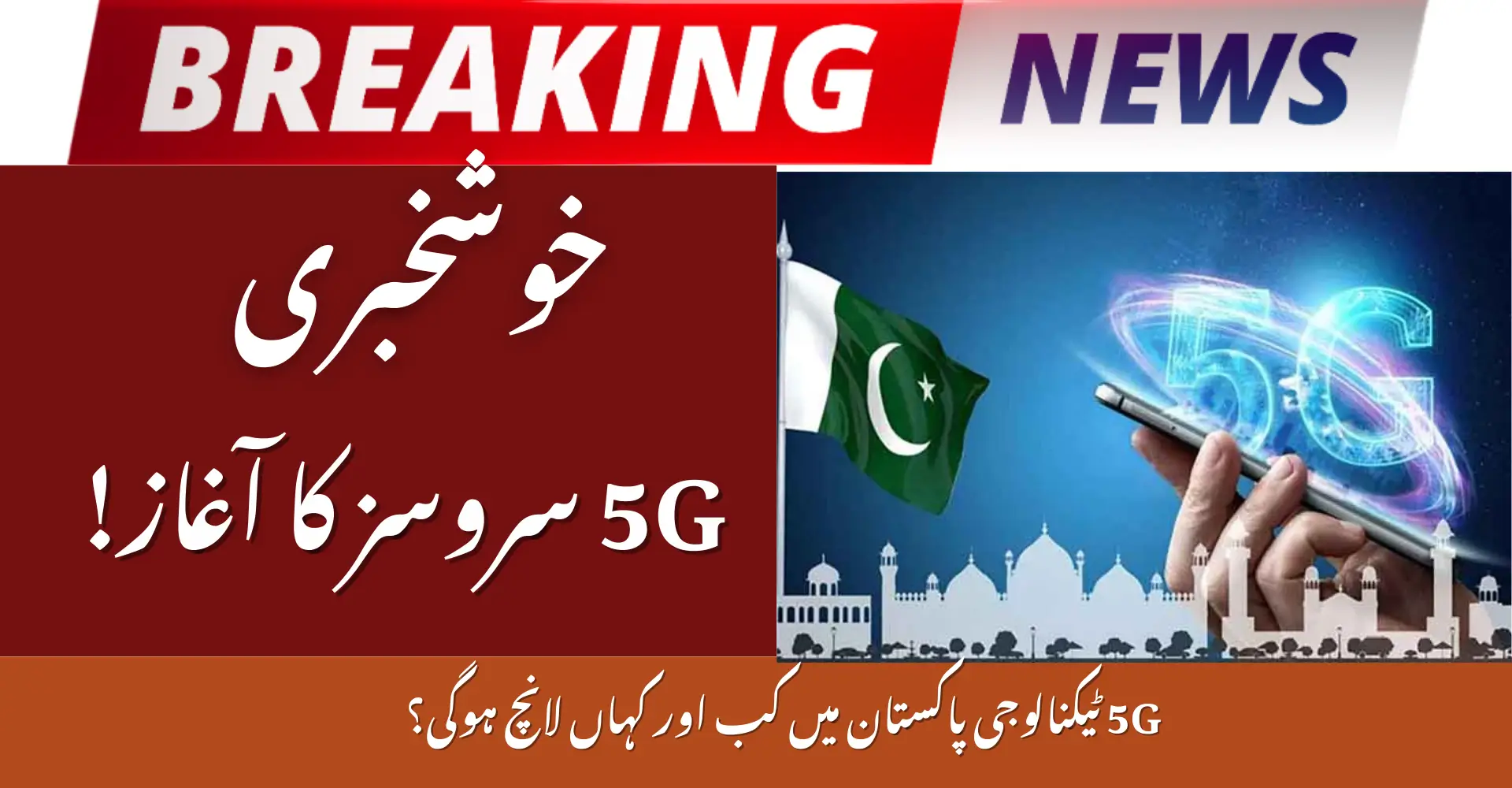
Pakistan to Launch 5G Services in 7 Major Cities. Pakistan is set to take a transformative leap in digital connectivity as the government announces plans to launch 5G services in seven major cities by 2026. This move under the Digital Pakistan initiative aims to strengthen internet speed, improve business opportunities, and modernize public services. Citizens, businesses, and tech enthusiasts can expect a digitally empowered Pakistan in the coming years.

Official Announcement and Digital Pakistan Strategy
The rollout plan was officially confirmed by Federal Minister for IT and Telecommunication, Shaza Fatima Khawaja, during the 26th ITCN Asia Expo in Karachi. Initially targeting major urban and economic centers, the initiative ensures infrastructure readiness while prioritizing cities that serve as commercial and innovation hubs.
Key Points:
- Focus on major urban and economic centers
- Aligned with Digital Pakistan’s broader goals
- Phased rollout for efficient management
You Can Also Read: iPhone 18 Unlikely in 2026 as Apple Considers Changing Its Launch Plans
What 5G Technology Means for Pakistan
5G, the fifth generation of wireless technology, offers significant upgrades over existing 4G networks:
- Ultra-fast internet: Download speeds up to 10 Gbps, 100x faster than 4G
- Low latency: Around 1 ms, ideal for real-time applications
- IoT and smart city integration: Connects thousands of devices efficiently
For Pakistan, 5G is more than just faster internet. It provides the foundation for digital transformation, improving government services, supporting remote work, and enabling AI-driven solutions. The seven cities will act as pilot zones before nationwide expansion.

Benefits of 5G for Pakistan:
- Boost for smart infrastructure and industrial zones
- Enhanced online services and public administration
- Support for emerging startups and tech-driven businesses
5G vs 4G: Key Differences in Pakistan
| Feature | 4G | 5G |
|---|---|---|
| Download Speed | Up to 100 Mbps | Up to 10 Gbps |
| Latency | Around 50 ms | Around 1 ms |
| IoT Support | Limited | Extensive |
| Network Capacity | Moderate | Very High |
| Economic Impact | Moderate | Significant |
Takeaway: 5G will transform connectivity, support smart city applications, and provide higher network capacity in dense urban areas.
Digital Pakistan Vision and 5G Integration
The 5G rollout is a cornerstone of Pakistan’s Digital Pakistan vision, focusing on:
- Expanding broadband coverage
- Improving cybersecurity and data protection
- Promoting digital literacy and youth skill development
Minister Khawaja highlighted that digital advancement is essential for national growth. Collaboration with international partners, regulatory reforms, and infrastructure investment are central to ensuring Pakistan keeps pace with regional digital economies.
Integration Areas:

- E-government services for improved efficiency
- Cybersecurity frameworks to protect citizens’ data
- Nationwide inclusion for future digital initiatives
Economic and Technological Impact
5G is expected to boost Pakistan’s economy by enabling new business models and improving productivity across sectors such as:
- Fintech: Faster, secure digital transactions
- E-commerce: Seamless online shopping and logistics
- Healthcare: Telemedicine and connected health devices
- Education: Enhanced e-learning with low-latency connectivity
Technologically, 5G will support:
- Advanced manufacturing and smart factories
- Data-driven decision-making and analytics
- Smart logistics and urban planning
Outcome: Increased foreign investment, technology-driven startups, and a competitive edge in the regional digital landscape.
Challenges in 5G Deployment
Despite its advantages, 5G rollout faces several hurdles:
- High infrastructure costs for towers and fiber-optics
- Technical migration from 4G to 5G systems
- Limited affordability of 5G-enabled devices for consumers
- Regulatory coordination and spectrum allocation
Proactive Solutions:

- Phased rollout to manage financial and technical complexity
- Government incentives and public-private partnerships
- Awareness programs to increase adoption of 5G devices
AI Policy and Youth Skill Development
Alongside 5G, Pakistan has approved its first national AI policy to equip youth with future-ready digital skills.
Highlights:
- Training 500,000 to 1 million young people in AI and cybersecurity by 2026
- Focus on emerging fields like data analysis, smart infrastructure, and cybersecurity
- Supporting startups and innovation in 5G-enabled technologies
This initiative ensures that digital skills align with technological infrastructure, enabling Pakistan’s workforce to thrive in a high-tech ecosystem.
Connectivity Issues and Cybersecurity Measures
Pakistan’s internet infrastructure has faced challenges such as:
- Damage to submarine cables impacting connectivity
- Limited fiberization in rural areas
Government Response:

- Expanding submarine cable capacity
- Increased fiber-optic networks nationwide
- Strengthening cybersecurity to safeguard public and government systems
5G expansion will rely on robust infrastructure and enhanced security measures to prevent cyber threats and ensure reliable connectivity.
Timeline for 5G Rollout in 7 Cities
| City | Expected Launch | Focus Area |
|---|---|---|
| Karachi | Q1 2026 | Business and commerce |
| Lahore | Q2 2026 | Education and tech parks |
| Islamabad | Q2 2026 | Government services |
| Rawalpindi | Q2 2026 | Residential & smart tech |
| Faisalabad | Q3 2026 | Industrial zones |
| Peshawar | Q3 2026 | IT and startups |
| Multan | Q4 2026 | Agriculture and trade |
Phased approach ensures controlled deployment while addressing technical and financial challenges.
Benefits of 5G for Citizens and Businesses
- Ultra-fast mobile internet: Smooth streaming, gaming, and video conferencing
- Smart city applications: Efficient traffic, energy, and public service management
- Innovation opportunities: Startups and tech entrepreneurs gain a competitive edge
- Enhanced public services: Faster e-government access and administrative efficiency
Image Suggestion:
- Alt Text: “5G network towers in Pakistan with digital icons representing smart cities”
- Use in blog for featured image or section header
FAQs
Q1: When will Pakistan officially launch 5G services?
A1: The phased rollout will begin in Q1 2026 in Karachi, with full coverage across seven cities by Q4 2026.
Q2: Which cities will get 5G first in Pakistan?
A2: Karachi, Lahore, Islamabad, Rawalpindi, Faisalabad, Peshawar, and Multan.

Q3: How will 5G benefit Pakistan’s economy?
A3: 5G enables faster digital services, supports startups, enhances industrial efficiency, and attracts foreign investment.
Q4: What challenges does Pakistan face in deploying 5G?
A4: High infrastructure costs, technical migration from 4G, limited affordability of devices, and regulatory coordination.
Q5: Is 5G rollout linked with youth skill development?
A5: Yes, Pakistan’s AI policy and digital skills programs aim to train 500,000–1 million young people to leverage 5G-enabled technologies.
Conclusion
The launch of 5G in seven major Pakistani cities marks a transformative step towards a digitally empowered nation under the Digital Pakistan initiative. With strong government backing, enhanced cybersecurity, AI-focused youth programs, and robust infrastructure planning, Pakistan is poised for rapid technological growth in 2026.